
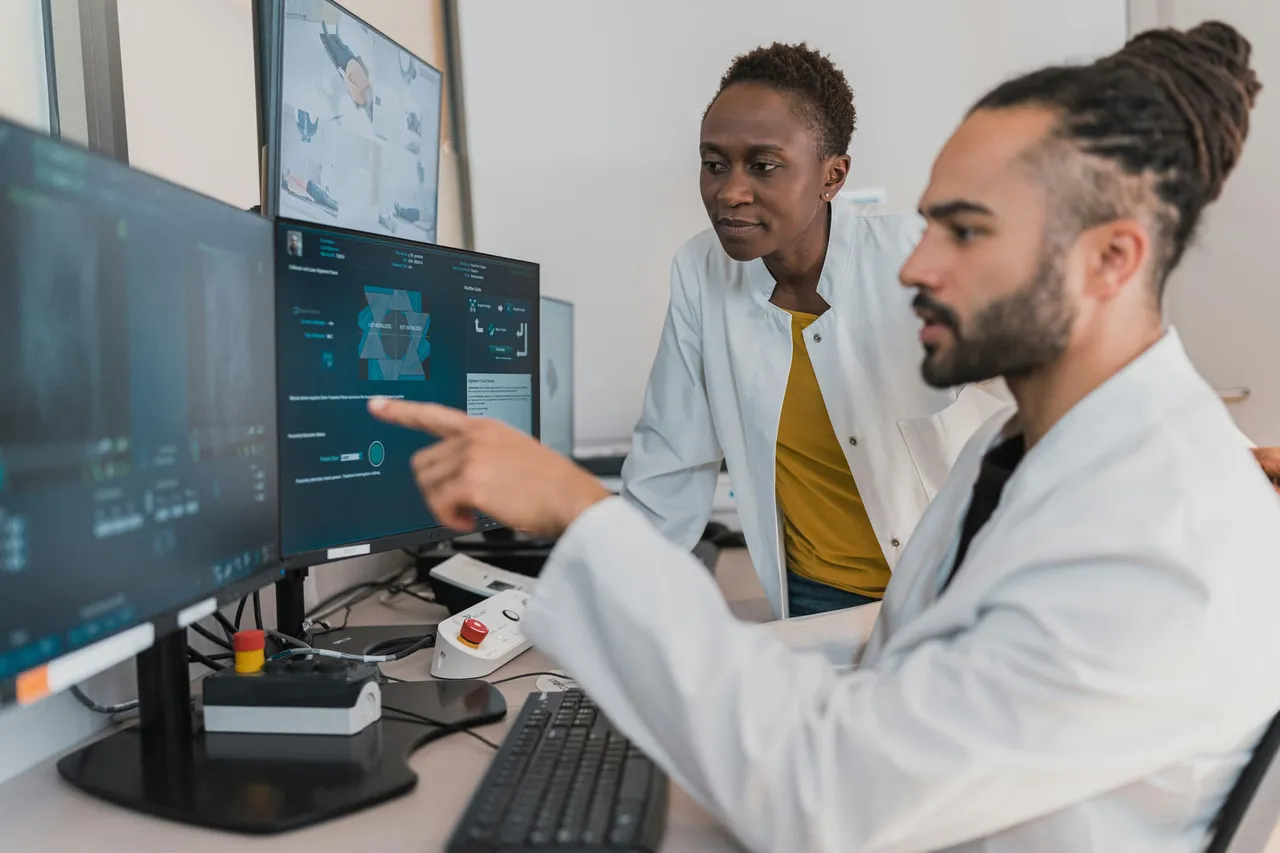
AI-powered recovery intelligence for smart knee implants
Patients onboarded after surgery: from 30% to 95%.
Giving smart implants a voice
Canary Medical needed to turn raw implant sensor data into clinical decisions. We built the analytics platform that predicts each patient's recovery, adjusts physical therapy as they progress, and flags the patients at risk before complications arise.



The problem worth taking on
Catch the drift before the symptom.
The Approach
We built a clinical platform that turns the implant's data into early warnings. Models spot patients drifting from their expected recovery curve before symptoms appear. Therapy adjusts to each patient's measured range of motion and gait. Clinicians see the few who need them; everyone recovering well is encouraged automatically.
The Challenge
Knee replacement patients face a long recovery. Surgeons relied on occasional office visits and patients' own reports to catch complications, and physical therapy followed a generic timeline instead of each patient's progress. Problems surfaced late, while patients recovering well still came in for visits they did not need.
Making implant data actionable
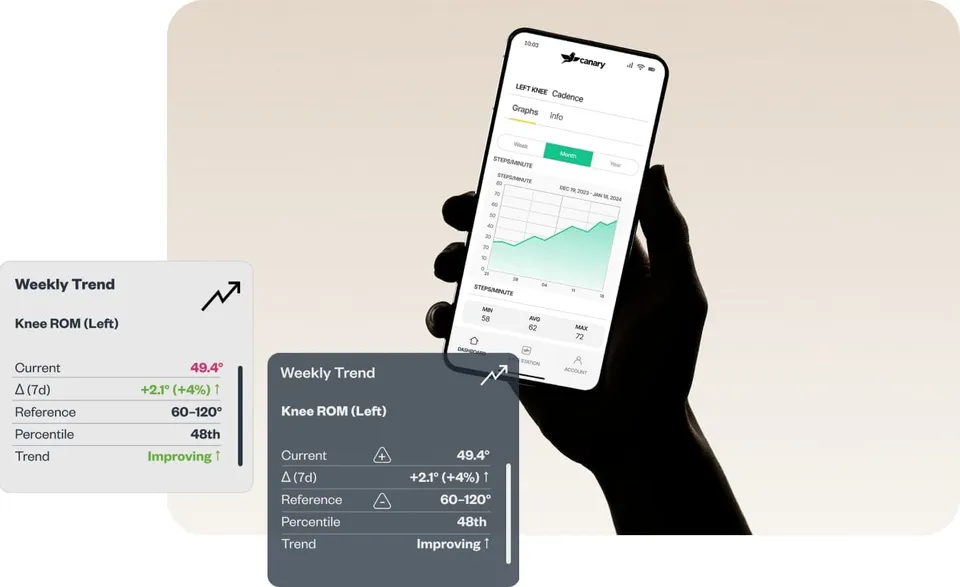
Canary Medical pioneered the world's first FDA-authorized smart knee implant, partnered with Zimmer Biomet to create Persona IQ. They approached SpiceFactory to build the clinical intelligence layer that would transform sensor data into better outcomes—for patients, clinicians, and the healthcare economics of joint replacement. Working inside Canary's team, we evolved from basic data visualization to a comprehensive AI-powered platform with predictive recovery curves, automated PT protocols, and automatic RPM documentation.
The SpiceFactory team goes above and beyond to deliver applications our patients and clinicians love. They have been a great partner in delivering significant clinical value with our smart implant technology.
— Kevin, Senior Manager, R&D at Canary Medical
From 6 raw signals to a recovery prediction
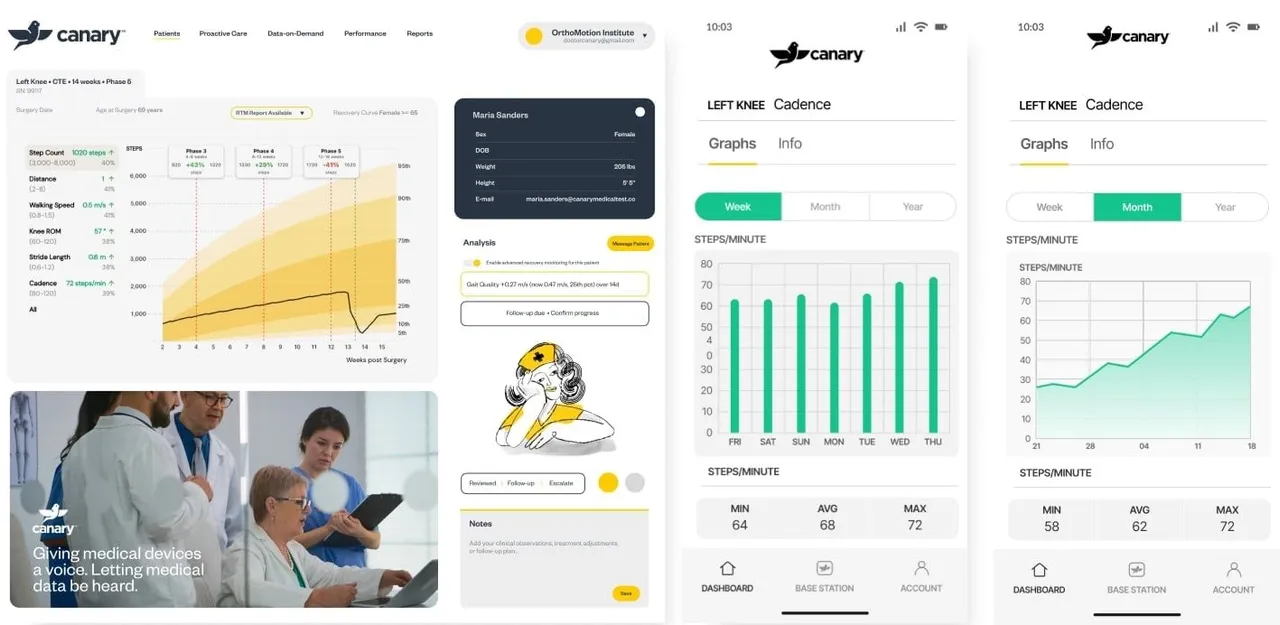
Every smart knee implant streams six continuous signals — steps, distance, walking speed, range of motion, stride length, and cadence. Raw, those numbers mean nothing. Our ML pipeline turns them into a real-time prediction of how this specific patient's recovery compares to thousands of similar cases.
Clinical impact at every level
The platform delivers measurable value across the entire care ecosystem.
For patients
- Faster Recovery — ML-optimized PT protocols adapt to actual progress, not generic timelines
- Less Pain — Early intervention reduces complications that drive opioid prescriptions
- Fewer Clinic Visits — Remote monitoring eliminates unnecessary trips for healthy recoveries
- Confidence in Progress — Daily metrics and peer comparisons keep patients motivated
For healthcare economics
- Documentation — RPM billing documentation generated automatically
- Lower Readmission Costs — Catching complications early prevents expensive interventions
- Insurance Value — Objective recovery data supports medical necessity and reduces denials
- Satisfied Patients — Better outcomes drive referrals and practice growth
For clinicians
- Time Savings — Focus on the 10% who need attention, not reviewing normal recoveries
- Early Warning System — AI flags at-risk patients before symptoms manifest
- Quick Actions — One-click PT adjustments, medication changes, and follow-up scheduling
- Evidence-Based Decisions — Population benchmarks replace guesswork

The recovery intelligence platform
- Canary Quantiles™ Recovery Curves — ML-powered population benchmarks stratified by demographics
- Predictive Risk Engine — AI models flag patients likely to deviate from recovery trajectory
- Automated PT Progression — Therapy protocols adjust based on real ROM and gait data
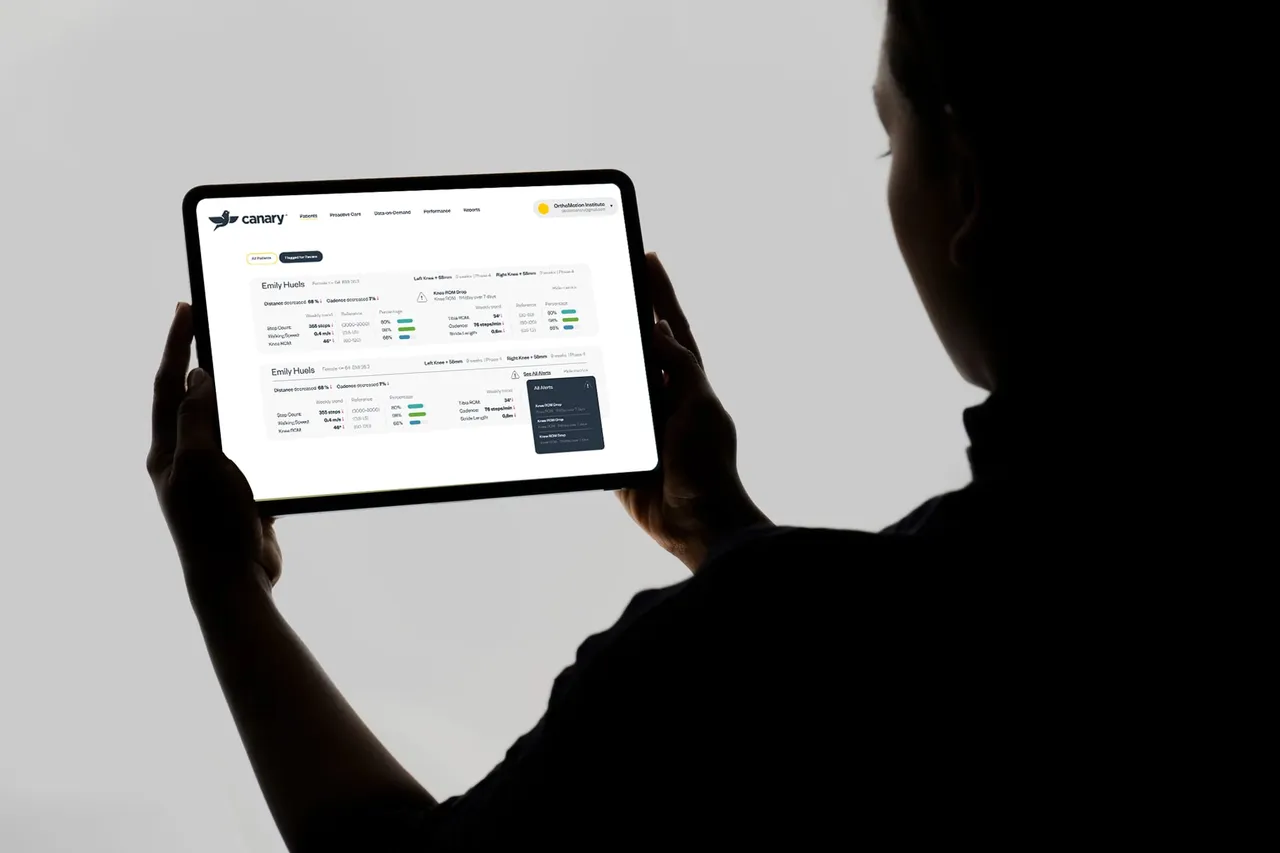
- Clinician Dashboard — At-a-glance patient cohort monitoring with prioritized action lists
- Patient Mobile App — React Native app with daily progress and motivational insights
- Smart Alert System — Tiered notifications route urgent cases to immediate attention
- RPM Documentation — Generated automatically for Remote Patient Monitoring
- 10-Year Data Architecture — Azure infrastructure designed for decade-long patient relationships
Recovery, measured.
Recovery used to be judged from office visits and what patients remembered. Now it is measured every day, from the implant itself. Patients onboarded after surgery rose from 30% to 95%. Clinicians spend their time on the few who drift from their expected curve, and the verification evidence went into Canary's De Novo submission.



Building something like this?
Tell us what the business needs to win and who owns it on your side. If it is a fit, a First Build starts within weeks. If it is not, we will tell you why.